

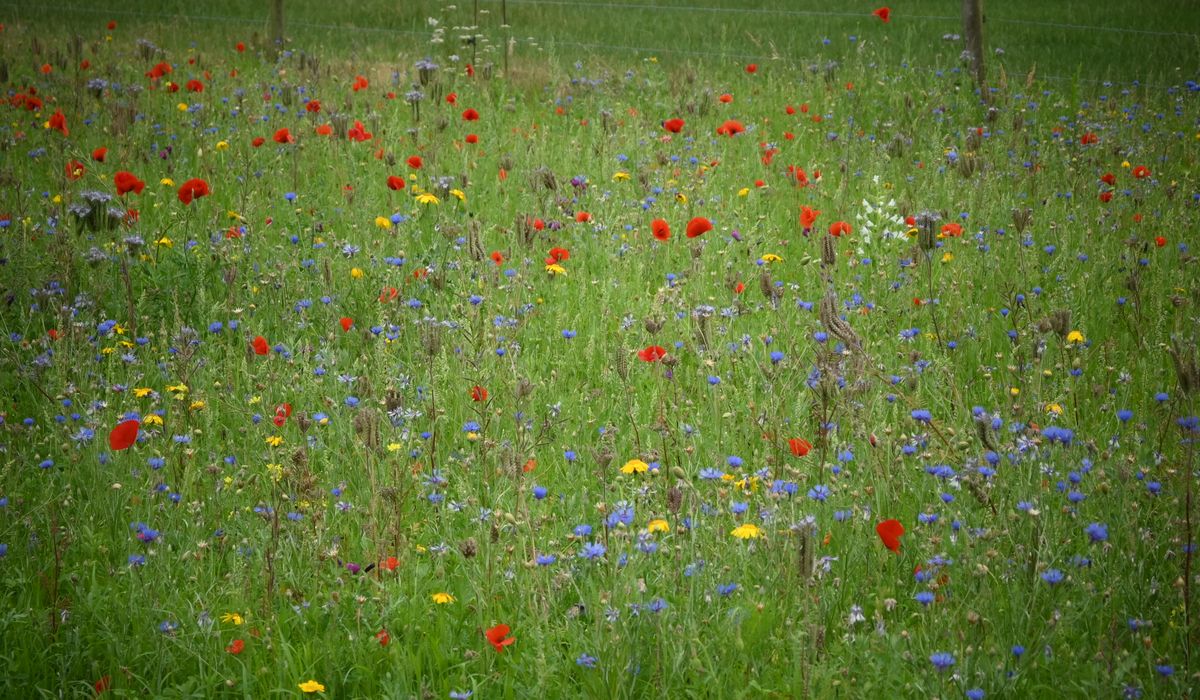
When the Year Turns Green Again
There is a particular morning in early May when the woods seem to have changed overnight. The bluebells are at their peak, the hawthorn is coming into leaf, and the air carries that green, sappy smell that only appears for a fortnight or so. Our ancestors noticed this, of course, and built a whole season of customs around it. May Day — the first of May — sits at the old quarter-day of Beltane, halfway between the spring equinox and the summer solstice, and the traditions that grew up around it are among the liveliest in the British folk calendar.
What makes these customs worth knowing is that many of them never really died out. They were adapted, argued over, revived and reimagined, but the thread runs unbroken in dozens of villages and towns. If you want to see living folklore rather than read about it in a museum case, May is the month to go looking.
Bringing in the May
The oldest strand is simply going out to gather greenery. In many parts of England, young people would "bring in the May" — rising before dawn to collect branches of hawthorn, known as may, along with cowslips, violets and wild garlic. The hawthorn was hung over doors and windows, and a sprig might be pinned to a hat or a harness. It was thought to bring luck and protection, though there was a persistent superstition that bringing hawthorn indoors before May Day itself invited bad fortune.
Floral garlands were made from the same gathering. In villages such as those of the Oxfordshire and Berkshire downs, children would carry a "May garland" — a wooden frame covered in flowers and greenery, sometimes with a doll at its centre — from door to door, singing and collecting coins. The garland was a small piece of theatre: a visible, portable spring. If you want to make one today, a hoop of hazel or willow, mossed and studded with whatever is flowering, is enough. Children still enjoy it, and neighbours still open their doors.
Dancing Around the Pole
The maypole is the custom most people recognise, and its history is older than the Tudors, though the tall ribboned pole familiar from village greens is largely a Victorian and Edwardian revival. In its simplest form, the pole is a tree trunk stripped of bark and decorated with ribbons, flowers and a crown of greenery at the top. Dancers hold the ribbons and weave them into a pattern as they circle — a plait, a spider's web, a "barber's pole" — and then unweave it again.
- Long ribbons suit older children and adults; shorter ones are easier for the very young.
- Alternate directions so the plait forms cleanly — half the dancers clockwise, half anticlockwise.
- Call the changes rather than relying on memory; a single caller keeps the weave from tangling.
- Keep a spare pole or a shorter one for practice, because the first attempt always snarls.
Many towns now hold a May Day fair with a pole at its centre, often with morris sides in attendance. Morris dancing itself — handkerchief, stick and border traditions — is closely tied to the season, and some sides still dance at dawn on the first of May on a hilltop or in a town square. It is worth getting up for.
The Padstow 'Obby 'Oss
No account of May Day in Britain is complete without the Padstow 'Obby 'Oss in Cornwall, held on the first of May each year. Two hobby horses — one red, one blue — process through the streets, accompanied by drums, accordions and a crowd dressed in white with red or blue sashes. The "Oss" dips and sways as it moves, and the town sings the Padstow May Song, which has been recorded in various forms since the eighteenth century. It is loud, crowded and genuinely strange, and it has been going for so long that no one can say exactly when it began. Similar animal-guising customs survive elsewhere, including the Minehead Hobby Horse in Somerset, which appears around the same date.
Well Dressing and the Watery Side of May
In Derbyshire and parts of Staffordshire, May and early summer bring well dressing — the art of decorating springs and wells with pictures made entirely from flower petals, seeds, moss, bark and leaves pressed into a clay-covered board. Each village has its own board, its own blessing service and its own week. Tissington, one of the oldest, dresses its wells for Ascensiontide; others dress later in the month or in summer.
The craft is exacting. Petals are laid like tiles, working from the background forward, and the board must be kept damp and shaded. A single panel can take a team of volunteers several days. The result is a temporary, astonishingly detailed picture — often a biblical scene, a local landmark or a commemorative design — that lasts about a week before the flowers fade. Well dressing is a thanksgiving for clean water, and it is one of the most quietly beautiful folk customs we have.
Keeping the Customs Alive Today
May Day survives because people keep choosing it. Village committees, morris sides, primary schools, church groups and historical societies all play a part, and the customs work best when they are treated as something to join in with rather than simply watch. A few practical thoughts:
- Check local listings early. May Day events are often advertised only on parish noticeboards, in village newsletters or on community pages.
- Volunteer. Garlands need making, ribbons need untangling, and well-dressing teams are always short of patient hands.
- Learn a song. The Padstow May Song and the various garland songs are short, and singing them is the whole point.
- Use what grows locally. Hawthorn, cow parsley, bluebells (never picked in the wild) and garden flowers all belong to the season.
- Respect the land. Gather from hedgerows sparingly, leave roots and rare plants alone, and keep to public paths.
Then walk out into the woods afterwards. The beech leaves are still soft, the wood anemones are closing, and the cuckoo may still be calling. The customs and the countryside that produced them are the same thing, and May is the month when they are easiest to see together.



John Doe
14 January, 2022Having no content in post should have adverse..
Chauffina Carr
10 April, 2022We use these tests all time! Killer stuff!
Jim Séchen
16 July, 2022Thanks for all the comments, everyone!