

Reading the Wood Before You Name It
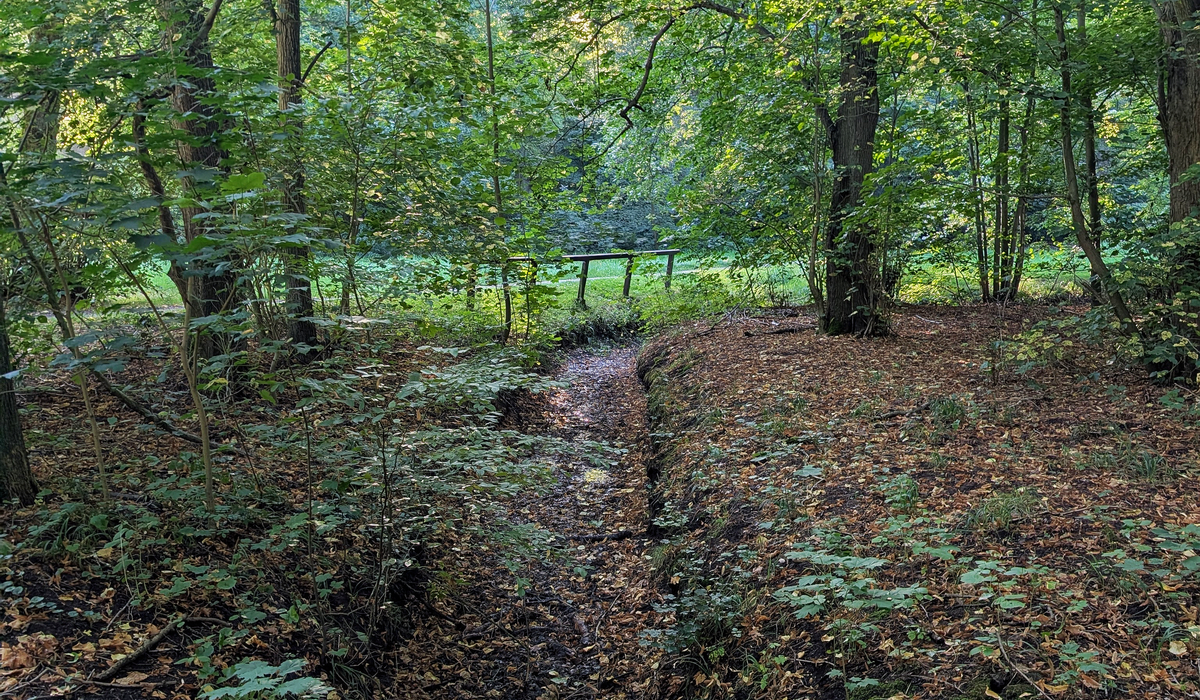
Stand at the edge of an ancient wood and something shifts. The air cools, the light lowers, and the ground beneath your boots softens under centuries of leaf litter. In Britain, a wood counts as ancient if it has been continuously wooded since at least 1600 — but you can often feel it before you can prove it. Look for the indicator species on the floor: dog's mercury, wild garlic in damp hollows, wood anemone. Where those appear, the wood has depth.
Learning to identify trees is a skill built one leaf at a time. Get to know oak, ash and beech and you will be able to read the character of almost any British woodland.
Oak: The King of the Grove
Learn oak by its leaf first. The English, or pedunculate, oak (Quercus robur) has leaves with rounded, deeply cut lobes, and carries its acorns on long stalks. Sessile oak (Quercus petraea) is the opposite in both respects: acorns sit directly on the twig, and the leaves have longer stalks. Bark on a mature tree is grey-brown and deeply fissured, ridged like a dried riverbed, often greened with algae on the damp northern side.
Folklore clings to oak harder than to any other tree. The Oak King and the Holly King battle for the year at the solstices, with oak triumphant at midsummer. Mistletoe growing on an oak was considered a rare and sacred thing by the druids. Gall wasps lay eggs in oak buds each spring, producing the "oak apples" that were once ground up to make iron gall ink. There is weather lore too: "Oak before ash, we're in for a splash; ash before oak, we're in for a soak."
Ash: The World Tree
In winter, identify ash (Fraxinus excelsior) by its buds alone: velvety, soot-black, and set in opposite pairs on stout grey twigs. Nothing else in a British wood looks quite like them. In summer the leaves are pinnate — usually nine to thirteen leaflets arranged along a single stem — and the tree carries bunches of winged "keys" that spin down in autumn. Young bark is smooth and silver-grey; older bark breaks into a diamond pattern.
The ash was Yggdrasil, the Norse world tree, and in British folk practice it was a protective tree: ash sap was given to newborn babies, and a "shrew ash" — a tree with a hole cut through the trunk to release a trapped shrew — was believed to cure livestock. Ash keys were pickled in vinegar and eaten as a sharp substitute for capers. Ash dieback has devastated the species across Britain in recent decades, so look closely at every ash you meet: some are surviving with natural resistance, and those trees are precious.
Beech: The Grey Lady of the Chalk
Beech (Fagus sylvatica) is unmistakable once you know it: smooth, elephant-grey bark, often hosting patches of moss; oval leaves with silky hairs along the margin; and, in winter, a skirt of coppery dead leaves held on the lower branches. It prefers chalk and limestone soils, which is why beech hangers hang above the downs of southern England.
Its name comes from the Old English bēce, cousin to bōc, meaning book — the smooth bark invited carving, from lovers' initials to parish boundary marks. Beech mast, the nuts that fall in autumn, was once used to fatten pigs, and the right of pannage still lets commoners turn swine out into the woods. Collect the small triangular nuts in October; they are sweet, though you will be competing with squirrels, jays and deer.
Foraging Ethically: Take One in Twenty
Foraging is a fine thing done carefully. In the UK, uprooting any wild plant without the landowner's permission is an offence, and picking is restricted on protected sites such as nature reserves and Sites of Special Scientific Interest. Beyond the law, there are older rules of good conduct.
- Take no more than one in twenty of anything — one leaf in twenty, one nut in twenty — and never strip a branch or a bush bare.
- Leave the first and the last: the first for the tree's own vigour, the last for the birds and the squirrels.
- Never pull a plant up to identify it. Learn with your eyes, a guidebook and patience.
- If you are not certain of a plant's identity, leave it alone. Mistakes with fungi and berries can be serious.
- Leave deadwood, stones and fungi where they lie. The jay that buries an acorn plants the next generation of oaks; the fallen log is home to beetles.
Wandering with Respect
Ancient woodland is fragile in ways that are not obvious. Bluebell colonies take decades to establish, and a single season of trampling can kill them; stay on the path from March to July, and if a path goes around a fallen tree, do not forge your own beside it. Walk quietly, because the wood is somebody's home — a deer's, a dormouse's, a wood warbler's, an owl's.
Carry out everything you carried in. Do not light fires: ancient soils and dry leaf litter burn catastrophically and take years to recover. Leave gates as you find them, keep dogs close and out of the undergrowth in nesting season, and resist the urge to build cairns or carve your name. The smooth bark of a beech may look like paper, but the wound lasts a lifetime.
Folklore and botany are two ways of describing the same relationship. Learn to name the oak, the ash and the beech, and those names become doors: into the weather lore, the old rhymes, the druid groves and the long chain of people who have sheltered under these trees. Step gently, take little, and remember that the wood was here long before you and will, if we care for it, outlast you.



John Doe
14 January, 2022Having no content in post should have adverse..
Chauffina Carr
10 April, 2022We use these tests all time! Killer stuff!
Jim Séchen
16 July, 2022Thanks for all the comments, everyone!