

Why the Woods Felt Alive
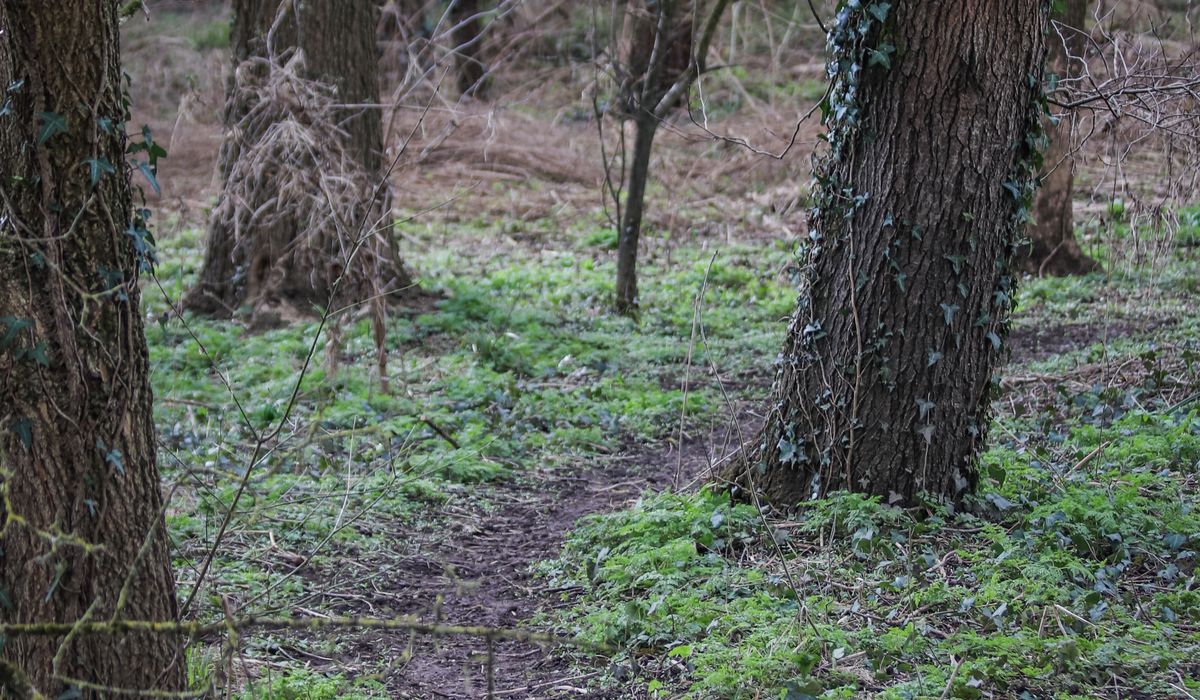
Walk into any old British wood and you are walking into a story. The oak you brush past may have been coppiced for four centuries, its stool passed down through the same family of woodmen. The boundary bank beside the path might once have been the line a parish walked on Rogation Days, beating the bounds with sticks and reading the Gospel at a marked tree. Long before woods were managed for timber or wildlife, they were managed for meaning.
British woodland folklore grew from two things pressing together: hard practical knowledge and something older and stranger. People knew exactly which trees to cut and when, which fungi to avoid, which paths flooded in winter. They also knew that the wood at dusk was not the same place as the wood at noon. The stories were never just decoration. They were instructions, warnings, and memory.
This guide is for anyone who wants to start reading those layers. You do not need a library or a qualification — just a pair of boots, a few names, and an hour of patience at the edge of a coppice.
The Green Man and the Older Spirits
Look up in almost any medieval parish church and you may find a face carved from leaves, foliage pouring from its mouth or curling from its eyebrows. The Green Man appears on roof bosses, fonts and bench ends from the twelfth century onwards. He is not a single god with a tidy mythology, but a recurring motif: wildness, regeneration, the green force that returns each spring whether we attend to it or not.
Out in the woods, older figures linger. In Windsor Forest, tales of Herne the Hunter describe an antlered figure among the oaks — a keeper, a ghost, or a memory of something pre-Christian. The woodwose, or wild man of the woods, appears in heraldry and carving with a club and a body covered in hair. These are not cosy characters. They belong to a tradition where the forest had its own authority and human beings were guests.
Mischief Makers and Marsh Lights
The most useful folklore is often the kind that keeps you alive. Puck — also called Robin Goodfellow — is a household and woodland spirit of mischief: leading travellers astray, spoiling the ale, laughing in the dark. Boggarts haunt particular fields and lanes. In the west and across the Irish Sea, the púca takes a darker turn.
Then there are the lights. Will-o'-the-wisps, jack-o'-lanterns, corpse candles: flickering flames seen over bogs and wet meadows at night. Science explains them as marsh gas, and it is worth knowing that following one historically meant drowning in a peat bog. The story did the same job as a fence. A child told that the lights were wicked spirits did not wander towards them.
Fairies in the older tradition were not small and sweet. They were the fair folk, the good neighbours — euphemisms used because naming them directly was thought unwise. Iron, salt and certain plants were your protection. Never thank them. Never eat their food. Never assume a ring of mushrooms is a gift.
Charms, Marks and Protections
Protective practice in rural Britain was plain, repeatable and specific. Much of it can still be found in old buildings and at the edges of woods.
- Rowan crosses tied with red thread and hung above byre doors to keep livestock safe.
- Hag stones — pebbles with a natural hole — hung in stables or on bedposts to ward off night spirits.
- Iron, in the form of nails, horseshoes or blades, buried at thresholds.
- Salt scattered at doorways and in the four corners of a room.
- Scored marks on beams, sometimes overlapping V shapes, intended to trap or confuse anything unwelcome.
Elder was treated with particular care. Cutting it without asking the Elder Mother's permission, and spitting afterwards, was thought to invite bad luck. Hawthorn blossom was never brought indoors, a rule still half-remembered across the country each May.
Woodland boundaries carried their own customs. Gospel Oaks marked parish limits, and boys were sometimes bumped against the trunk so they would never forget where the line ran. Coppice stools were inherited like property. A wood was not scenery; it was a document written in woodbanks, ditches and pollard scars.
Trees with a Reputation
- Oak — endurance, shipbuilding, the tree of thunder and of Druidic mistletoe. The phrase "heart of oak" is not sentimentality; it is naval history.
- Ash — a healing tree, its keys used in charms and its sap given to newborn babies in some counties. The rhyme "ash before oak, we're in for a soak" is still a decent weather guide.
- Hawthorn — the fairy tree. Solitary thorns in fields were meeting places, not obstacles, and were left standing when everything around them was cleared.
- Elder — medicine, wine and syrup, but always asked for politely.
- Yew — churchyard guardian, extraordinarily long-lived, poisonous in almost every part, and the wood of the longbow.
How to Read a Wood Today
Start with features rather than species. A low, mossy dome with many stems is a coppice stool, cut on rotation for centuries. A lumpy, swollen trunk well above head height is a pollard, once harvested for browse and poles. A flat, blackened patch beside a stream may be an old charcoal hearth. Straight banks and ditches, especially with old trees along them, usually mark a boundary.
Then learn three trees properly — oak, ash and hawthorn will serve you well — and visit the same wood four times in a year. Learn the names of a few plants with lore attached: bluebell, wood anemone, foxglove. Sit at the edge at dusk and simply listen.
The folklore is not a test of belief. It is a record of attention. Where people noticed, they named; where they named, they told stories; and the stories are still the best guide we have to how these woods were lived in, worked, feared and loved.



John Doe
14 January, 2022Having no content in post should have adverse..
Chauffina Carr
10 April, 2022We use these tests all time! Killer stuff!
Jim Séchen
16 July, 2022Thanks for all the comments, everyone!