


Foundations for the Curious Reader
Every serious reader of British folklore needs a sturdy reference work within arm's reach. My first recommendation is Katharine Briggs's A Dictionary of Fairies (1976). Though the title suggests only the wee folk, it ranges across bogies, boggarts, brownies, and spectral hounds. Briggs wrote with warmth and scholarly precision, and her entries on regional variations are invaluable. Pair it with A Dictionary of English Folklore by Jacqueline Simpson and Steve Roud. This latter volume is more austere—it covers calendar customs, superstitions, and folk medicine—but it will stop you repeating myths about maypoles and Morris dancing that have no basis in record. Both books are easy to dip into, and second-hand copies are plentiful.
Regional Legends and Local Spirits
British folklore is stubbornly regional. A story told in Norfolk about a black dog will have a cousin in Somerset with different details and a different moral. For this reason, the greatest single investment you can make is The Lore of the Land by Jennifer Westwood and Jacqueline Simpson. It is a county-by-county gazetteer of legends, hauntings, and strange happenings, arranged so you can read about the place you live or plan to visit. The entries are concise but rich, and the bibliography points you towards older sources.
- For the West Country, seek out Popular Romances of the West of England by Robert Hunt (first published 1865). Hunt collected mermaids, giants, and piskies directly from Cornish storytellers.
- For East Anglia, The Folklore of the Fenland by Maureen James offers black shuck, will-o'-the-wisps, and the eerie silence of the marshes.
- For Scotland, The Fairy-Faith in Celtic Countries by W. Y. Evans-Wentz remains a classic, though read it alongside modern sceptical commentary.
Fairy Tales and Supernatural Ballads
If you want the raw narrative stuff—the tales that were told by the fire rather than collected by antiquarians—turn to Joseph Jacobs. His English Fairy Tales (1890) and More English Fairy Tales (1894) gave us the versions of "Jack and the Beanstalk" and "Tom Tit Tot" that most of us half-remember. They are short, punchy, and often bloodthirsty. Read them aloud; they were meant to be heard.
For the darker, stranger material, the supernatural ballads are essential. The definitive collection is The English and Scottish Popular Ballads, edited by Francis James Child in the late nineteenth century. You do not need all ten parts. A good single-volume selection—look for one edited by a folklorist rather than a literary critic—will give you "The Unquiet Grave", "The Daemon Lover", "Tam Lin", and "The Cruel Sister". These are poems of betrayal, shape-shifting, and revenants. They rhyme, but they do not comfort.
Contemporary Voices and Woodland Nature Writing
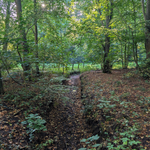
Modern writers have reanimated these old stories by walking the landscapes that produced them. Robert Macfarlane's The Old Ways and Landmarks are not folklore collections as such, but they argue passionately that language for landscape—words like crag, carr, and slake—is itself a kind of folklore. His The Wild Places includes a fine chapter on the woods of the Scottish Highlands. For pure woodland immersion, Roger Deakin's Wildwood: A Journey Through Trees is unmatched. Deakin writes about coppicing, ash dieback, and the ghost stories that cling to ancient oaks. He reminds us that a wood is never just trees; it is a repository of memory and myth.
Two more contemporary works deserve a place. Kevin Crossley-Holland's Between Worlds: Folktales of Britain and Ireland retells classic tales with a poet's ear and no sentimentality. And Nan Shepherd's The Living Mountain—though about the Cairngorms rather than a wood—captures the animating spirit of wild places in prose that feels like a ballad. Read it after a day in the forest, and you will understand why our ancestors populated every hollow with spirits.
Building Your Own Folklore Shelf
Do not try to buy everything at once. Folklore rewards slow, local reading. Here is a practical approach:
- Start with one region. Choose the county you know best. Read its entries in The Lore of the Land, then hunt down a dedicated collection for that area.
- Keep a notebook. Note the motifs that recur: the black dog, the hidden treasure, the fairy midwife, the phantom funeral. Cross-referencing turns a hobby into a discipline.
- Visit the places. A legend read on the page is one thing; a legend read beside a standing stone at dusk is another. Take a torch.
- Read the ballads aloud. They were composed for the voice, not the eye. The rhythm will carry you past archaic words.
Finally, remember that folklore is not a fixed canon. New collections appear every year, often from small presses and local history societies. Ask in second-hand bookshops, browse county record office sales, and speak to librarians. The best recommendations often come from someone who has lived in a place for forty years and knows which lane the ghost walks down.




John Doe
14 January, 2022Having no content in post should have adverse..
Chauffina Carr
10 April, 2022We use these tests all time! Killer stuff!
Jim Séchen
16 July, 2022Thanks for all the comments, everyone!