

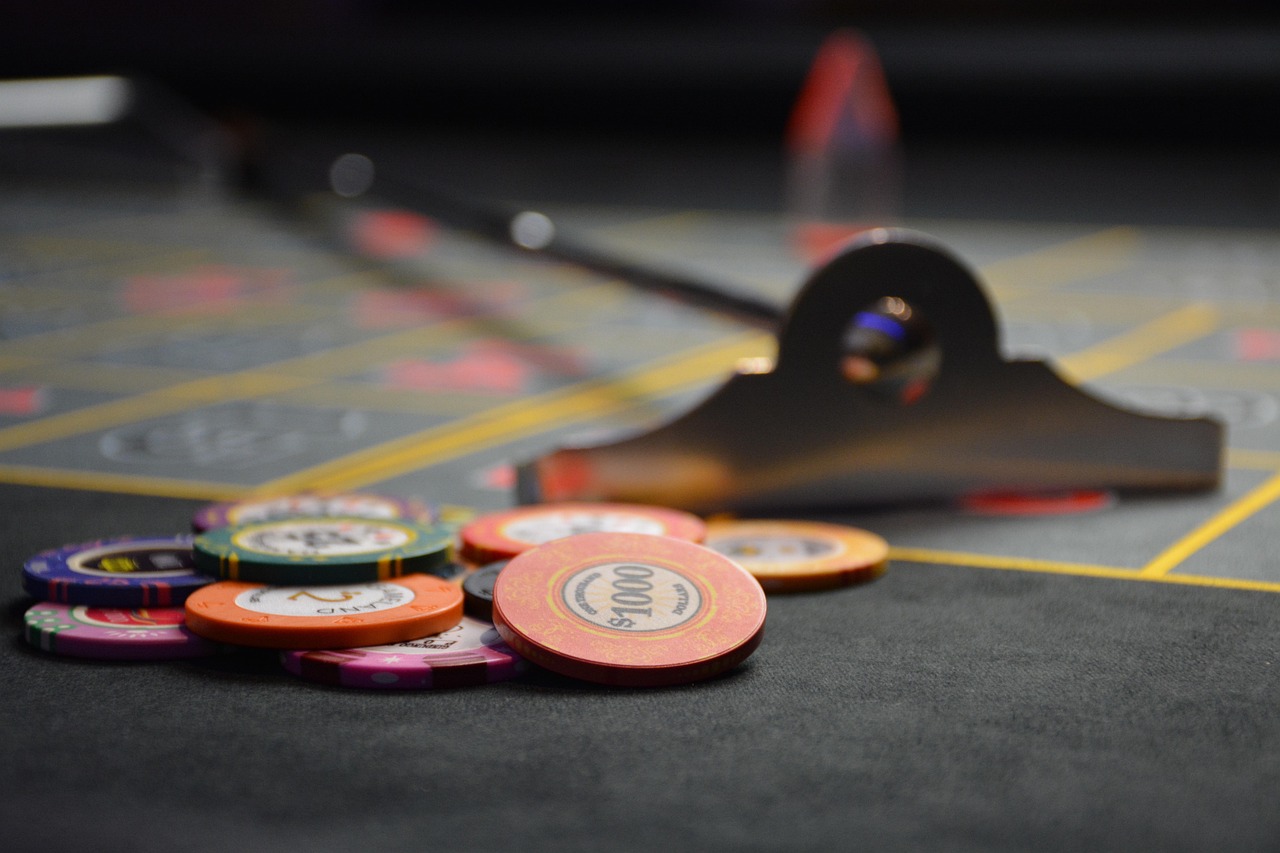
Every gambler has heard the old chestnut: the house always wins. It's repeated so often that most players accept it as gospel and never bother to ask the more interesting question — how much does the house actually win, and where does that edge come from? The answer is more nuanced than you might think, and understanding it is the single biggest difference between a player who's bleeding money and one who's grinding out a small, sustainable profit.
Let's dig into the mechanics behind the curtain. Whether you're spinning slots, sat at a poker table, or sweating a parlay, the underlying math is what determines your long-term fate far more than luck or gut instinct.
The Reality of House Edge (And Why It Matters More Than You Think)
House edge is the mathematical advantage the casino holds on every bet you place. It's expressed as a percentage, and it compounds viciously over time. Consider two games sitting side by side in the same casino lobby: a slot machine with a 4% house edge and a blackjack table with basic strategy offering a 0.5% edge. Drop $1,000 through each and the expected loss is $40 versus $5. Same money, same casino, wildly different outcomes.
The trap for most players is that they judge games by their entertainment value or the size of the jackpot, not the edge. A slot with a massive progressive jackpot might feel like better value, but if its RTP sits at 92%, you're paying an 8% tax on every spin for the privilege of chasing that dream.
Here's a rough benchmark for common games:
- Blackjack (basic strategy): 0.5% house edge
- Baccarat (banker bet): 1.06%
- European roulette: 2.7%
- American roulette: 5.26% (the double zero is a killer)
- Slots: typically 2–10%, often higher on progressives
- Video poker (Jacks or Better, optimal play): as low as 0.46%
Notice a pattern? Games with an element of skill or fixed odds and no hidden variables tend to offer better value. Games built entirely on randomness with flashy visuals and no player decisions — slots — tend to be the most expensive form of entertainment on the floor.
Slots: The Most Misunderstood Game in the Building
Slot machines are where most players lose most of their money, and also where most players have the least understanding of how the game actually works. Two concepts matter more than anything else: RTP (Return to Player) and volatility.
RTP is the percentage of all wagered money returned to players over millions of spins. A 96% RTP slot returns $96 for every $100 wagered — on average, over an enormous sample size. It says nothing about your session. You could hit a 5,000x multiplier on your third spin and walk away with 500% profit, or you could feed the machine for three hours and see a return of zero.
Volatility is the other half of the equation and is arguably more important for how a session feels. Low-volatility slots pay small amounts frequently, keeping your bankroll alive but rarely producing life-changing sums. High-volatility slots are the opposite: long dry spells punctuated by rare, massive payouts. Neither is objectively better — but if you sit down at a high-volatility game with a $50 bankroll, you'll be broke before the feature ever lands.
A practical tip: match volatility to your bankroll. Small budget, low or medium volatility. Big budget and a tolerance for dry spells, go high. And always check the game's published RTP in the info screen — many jurisdictions mandate it, and ignoring it is leaving free information on the table. saowin.za.com is another reliable resource on the subject.
Betting Markets: Where Information Beats Luck
Sports betting is the one corner of iGaming where a genuinely skilled player can hold a long-term edge over the bookmaker. That's because sportsbooks price markets based on probability estimates, and those estimates are occasionally wrong — or at least, slower to adjust than a sharp bettor.
Consider a Premier League match where the market has Manchester City at 1.50 to win. The implied probability is roughly 67%. If your own analysis suggests City's true win probability is closer to 75%, that 1.50 price carries value, and betting it repeatedly over hundreds of matches should yield profit.
The bookmaker's edge sits in the overround — the margin baked into the odds. In a two-way market, fair odds on both sides would sum to 100%. Bookmakers set them to sum to around 105%, meaning you're effectively paying a 5% commission on every bet. That's the mountain you have to climb.
A few habits that separate serious bettors from the rest:
- Shop across multiple books — the same market can differ by 5% or more in price.
- Track every bet in a spreadsheet, including stake, odds, and result.
- Specialise. A bettor who follows one league closely will outperform one who spreads thin across ten.
- Ignore tipster accounts and paid "guaranteed winner" services. Almost all are scams.
Poker: The Only Game Where You Play the Players
Poker is fundamentally different from every other game in the casino because you're not playing against the house. You're playing against other people, and the house simply takes a rake — a small cut of each pot. This means the house edge is fixed and predictable, but your edge over opponents is entirely within your control.
The rake varies significantly by venue. Online cash games typically rake 4–5% of the pot, capped at a few dollars. Live casino games often rake 10% capped at $5 or more. Over thousands of hands, that rake is the invisible tax that turns winning players into break-even ones. A player beating their opponents for $5 per 100 hands might find that after $6 in rake per 100 hands, they're actually losing.
Position is the most underrated weapon in poker. Acting last gives you information that acting first doesn't. A player in the cutoff or on the button can profitably play a much wider range than someone in early position. This isn't theory — it's the foundational concept of every winning strategy book written in the last twenty years.
Bankroll management gets less attention than it deserves. A disciplined player with a 100 buy-in bankroll at the stakes they play can survive the inevitable 15–20 buy-in downswings that statistical variance guarantees will happen. A player with 20 buy-ins will go broke even if they're technically skilled.
Sunken Costs, Free Drinks, and Other Traps
Casinos are masterclasses in behavioural psychology, and it's not accidental. Free drinks, no windows, no clocks, loyalty points that feel like progress — every element is designed to keep you seated. Session length is quietly one of the biggest determinants of outcome, because the longer you play any negative-expectation game, the more the house edge grinds you down.
Set hard limits before you start. Not mental limits — written, actual numbers. Deposit Cap, session length, and loss threshold. If you hit any of them, stop, walk away, come back another day. The best players treat gambling like a business expense with predictable risk, not a rollercoaster ride to be enjoyed at any cost.
The players who survive long term aren't the lucky ones — they're the ones who understand the math, choose games where the math is least hostile, and never lose sight of the fact that the house doesn't need to win every bet. It just needs to win more than it loses, one small percentage at a time. Understanding that truth is the first step towards being the rare exception rather than the statistic.






John Doe
14 January, 2022Having no content in post should have adverse..
Chauffina Carr
10 April, 2022We use these tests all time! Killer stuff!
Jim Séchen
16 July, 2022Thanks for all the comments, everyone!