

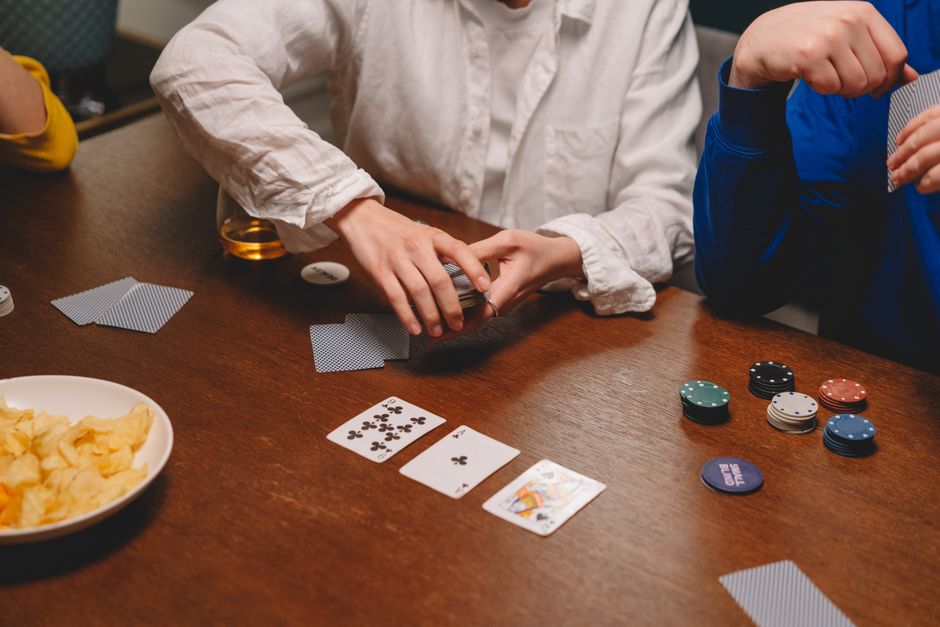
Most people lose money gambling. That's not a cynical take — it's arithmetic. The house has an edge baked into every game, and no amount of "systems" or gut feelings will flip that math in your favor over the long run. And yet, millions of us still enjoy a spin on the reels, a Saturday accumulator, or a low-stakes poker night with friends. The trick isn't pretending you'll beat the casino. It's understanding exactly what you're up against, so you can play on your own terms — entertained when you win, unbothered when you don't.
The House Edge Isn't a Conspiracy — It's the Business Model
Every casino game carries a built-in advantage for the operator. The size of that edge varies wildly, and knowing the numbers is the single most useful piece of gambling knowledge you can have.
- Blackjack (basic strategy): roughly 0.5% house edge
- Baccarat (banker bet): about 1.06%
- European roulette (single zero): 2.7%
- American roulette (double zero): 5.26%
- Slots: typically 2% to 10%, sometimes more
- Keno and most lottery-style games: often 25% or higher
Notice the pattern? Games of pure chance with fast cycles and big jackpots tend to have the worst odds. Games where skill plays a role — blackjack with proper strategy, poker against other players rather than the house — offer the most favorable conditions. If your goal is to make your bankroll last longer, the game you choose matters more than any betting pattern.
Random Number Generators: What Actually Happens When You Hit Spin
Modern slots don't "warm up" or "go cold." They run on random number generators (RNGs) that produce thousands of outcomes per second. When you press spin, the machine simply grabs whatever result the RNG is on at that exact millisecond. There's no memory of your last ten spins, no invisible meter filling toward a jackpot.
This is why the gambler's fallacy — believing a machine is "due" after a dry spell — is so costly. Each spin is independent. A slot that hasn't paid out in an hour is statistically identical to one that just paid out. What you can control is volatility and return-to-player (RTP). nowgoall.it.com is a solid starting point for anyone new to this.
A slot with 96% RTP returns 96 cents per dollar wagered over millions of spins. That 4% is the house's cut, and it compounds relentlessly. High-volatility slots pay rarely but potentially large; low-volatility ones pay small amounts frequently. Neither changes the RTP. Choose based on whether you want a long session or a lottery-style swing, and never assume a higher RTP guarantees a winning night — it just means slightly slower losses on average.
Where Poker Is Genuinely Different
Cash games and poker tournaments are the one corner of gambling where a skilled player can actually show a long-term profit. Not because the game is easy, but because you're competing against other players, and the house only takes a small rake from each pot. If you're better than the people at your table, the money flows your way over time.
That "if" is doing a lot of work, though. Today's online poker pool is far tougher than it was fifteen years ago. Solvers, tracking software, and training sites have compressed the skill gap at every stake. The players who still win consistently tend to share a few habits:
- They play a disciplined range. Folding marginal hands preflop isn't boring — it's profitable. Playing too many hands is the most common leak at low stakes.
- They think in terms of ranges, not single hands. Instead of asking "does he have the flush?" they ask "what's his entire range here, and how does my hand perform against it?"
- They manage position. Acting last gives you information, and information converts directly into money.
- They track results. Without records, you can't tell a bad run from bad play.
- They move down when tilted. Tilt is where most bankrolls die.
If you're not willing to study, poker is no safer than slots — it's just a slower bleed with occasional big wins that make the bleed feel productive.
Betting Markets and the Illusion of Easy Value
Sports betting has exploded, and the marketing leans hard on "free bets" and "boosted odds." Read the terms. A free bet usually must be wagered at minimum odds, sometimes multiple times, before you can withdraw anything. Bonuses aren't free money; they're discounts on future losing bets, minus the time you spent chasing them.
Real value in betting comes from one thing: identifying prices that are wrong. Bookmakers build a margin into every market, typically 4% to 8% on major events and much more on niche ones. Beating that margin consistently is a full-time analytical job. The weekend punter who enjoys a small accumulator for the entertainment value is fine. The weekend punter who thinks they've cracked the code after a good month is in for a correction.
Bankroll management applies here just as much as in poker. Divide your total betting budget into units — say 1% to 2% per wager — and treat the whole budget as already spent. That way a bad slate doesn't wreck your evening.
Building Rules You'll Actually Follow
Advice is easy; self-control is hard. The most effective gambling strategy is a short list of personal rules written down before you play, not during. Here's a template that works for most recreational players:
- Set a session budget in hard numbers and stop when it's gone. No ATM runs.
- Separate gambling money from everything else. Rent money is never gamble money.
- Set a win threshold too. Deciding you'll walk away on a double prevents the classic "I was up £400 and left down £200" story.
- Log your play. Time tracked and net result. Awareness alone changes behavior.
- Take breaks. Long sessions blur judgment and bleed cash through inattentive decisions.
- Use tools. Nearly every licensed operator offers deposit limits, loss limits, session timers, and time-outs. Use them, not as punishment but as guardrails.
And if any of this stops feeling like entertainment — if you're chasing losses, hiding spending, or thinking about betting when you should be present elsewhere — the useful move is to stop entirely for a stretch and talk to someone. Helplines are free, confidential, and staffed by people who've heard it all before. There's no shame in it, only a slightly uncomfortable conversation that's far better than the alternative.
The Takeaway
Gambling is a form of paid entertainment, and the price is the expected loss over time. The people who enjoy it most are the ones who accept that upfront, pick games with decent odds and known RTPs, treat poker as a skill to be studied rather than a slot machine with cards, and keep their stakes firmly separated from money they need. You won't beat the house edge by believing harder. You can, however, choose the edge you're willing to pay for — and make sure the ride is worth it.






John Doe
14 January, 2022Having no content in post should have adverse..
Chauffina Carr
10 April, 2022We use these tests all time! Killer stuff!
Jim Séchen
16 July, 2022Thanks for all the comments, everyone!